Can Biohacking actually work for regular people?
What happens when a perimenopausal woman tries to understand the science of energy optimization, minus the fancy equipment and complicated jargon.?
I’ve been studying lately,
not by choice, but because my feet decided to betray me. Post-surgery issues have kept me from exercise, walking, running, jumping, and all the fun movement stuff. So I did what any temporarily grounded person does: I hit the library.
But here’s the real reason I was so desperate for reading: I’ve been living in the perimenopausal fog. Brain fog. Energy crashes. That constant feeling of moving through life at half-speed. I was hoping praying, that somewhere in those library shelves was a book that could pull me out of this haze.
And I found it, an intriguing book named “The Spark factor - the secret to supercharging energy, becoming resilient, and feeling better than ever” from #DR Molly Maloof, edited in 2023. Perfect!
From all the books I have read, this one is definitely making an impact on me. It’s about BIOHACKING. Waouh. Can I even read that? I am not a big fan of biology. And I do not believe I have an “enough scientific brain” to understand all the crazy hard biochemical equations. But the author is making it so easy to understand in a very structured book and method - all in one.
So I wanted to share some tips I took with me so far (⅔ of the book read, re-read, studied, noted, commented on) and with which I built an action plan.
Definition:
Biohacking is about energy. And improve your length of health and length of life (focusing on quality of both)
It all starts in our mitochondria (argh biology) those little independent cells within our body. And 3 things are today, hurting them :
Insufficient movement
Overconsumption
Chronic stress without recovery.
Looks like our life doesn’t it?
Warning : “Biohacking is not a quick fix process. It’s about the small things you do every day that accumulate. Real, lasting health is about slow, sustained habit formation and consistency over time.”
In fine, I think this is the good news and I was really happy to read this. Because let’s be honest: if one more expert promises me instant results, I’m throwing the book across the room.
So we are all here for that: practically, what does that look like?
What can we really do, concrete actions to step up and naturally improve our health and life length? Us, the regular women with no $$ to spare on crazy infrared sauna and weird body composition analysis. (I will spare you the biological steps of mitochondrial functions into that.)
1- Movement “Movement is life’s energy signal”
And do not panic, it is not necessary to go for a run. “ When you move, your mitochondria get the signal to produce more energy, not just during exercise time, but all day long.” great, more good news.
TO DO:
Increase your NEAT ( non exercise activity thermogenesis - think of it as the basic consumption of energy of your body like breathing, digesting, sleeping) by doing a bit more.
HOW?
Take more steps: walk the dog, get out of the bus at a station ahead, park your car further in the parking lot, ditch the elevator, vacuum the house 2 times. Walk when you make a call. Move when you have a break at work. Ideal is to track your steps (phone all do that now) and slowly increase them.
Then, exercise: keep some time in your agenda to try to fit 30 minutes per day. You can’t? seems impossible. Begin with 10 minutes. Several options, like weight training, mind-body fitness (yoga, pilates, qigong, tai chi), HIIT (boost your cardio).
OK I know, sounds impossible for some of you with teens, and a career and a household and a not-so-helping husband. That’s where planning comes in handy or the power of small habits. More on that next week, let me finish the theory.
2- Food “Transforming food into energy”
The goal is to “power our bodies… Our mitochondria transform the food we eat into the energy we use.”
So, my friend, hard truth. Carbs are to watch for. Carbohydrates are everywhere from vegetables to cakes. Some contain fibers or resistant starch (beans) some contain sugar only. And sugar is inflammatory. We don’t want that for our little dear mitochondria, at least not too much. Fat is good for you if it is not coming from trans fat (chemically damaged vegetable oils) in a reasonable quantity. And protein is our friend to build muscles (because more muscles mean more calories used = eating more without putting weight on if I want to make a shortcut).
And in daily meals, what does that look like?
Focus on protein and good fat (yes butter is great on bread, skip the margarine) and try to replace carbs with vegetables. At least that’s how I began. If you are not hungry, don’t eat. Fasting or intermittent fasting is one of the best way to “cellular houseclean’” our body.
Some concrete tips would be :
Eat at regular meal time and avoid snacking (= eat enough during meal)
Begin your meal with fibers, vegetables and finish it with carbs (slower digestion = full longer)
Never eat carbs alone (snacking is the worst) add protein and fat to make it last and reduce the impact on your glycemic peak (think butter with your bread, peanut butter on apple, hard boiled egg to reduce hunger first).
Move after meals, walk, squats (10 is enough to tell the energy to go into muscles and not your fat store)
Forget sugar for breakfast. Your body needs energy from protein and fat after a night of fasting and it will digest them easily. Think German breakfast. Go for this sausage.
And my favourite, if you have sugar, drink a bit of apple cider vinegar in a glass of water to reduce the glycemic peak that undoubtedly will increase (but less than it should) your insulin and trigger the fat storing of the eaten sugar.
Sounds all do-able to you? More on that in 2 weeks.
3- Stress ‘Stress drains our battery”
“The acute stress response is adaptive and is designed to keep you alive” (fight or flight mode I know well since my body can’t seem to move away from it) so it is essential to set up recovery from stress. First acknowledge it and it can be everywhere : GUTS (Generalized Unsafety Theory of Stress) “Our brain is always scanning our environment for threats and is only able to relax when we feel a sense of safety.”
OK but how do I relax on a day to day basis :
Advice 1: Build a healthy body that has you able to run, lift, breathe fast if a danger were to come (think of escaping a wildfire).
Advice 2: Build a caring community. Not necessarily your family but surround yourself with a support system.
Advice 3: Improve your environment context (environment you live in, including dangerous urban environments, lack of green space and noise pollution.) Noise being a key word, often neglected. Lower your daily noise level. Enjoy the silence or … buy noise reduction headphones, cheaper versions being ear plugs.
Advice 4: Address the ACEs (Childhood trauma and Adverse Childhood Events) to professionals. The goal is to reprogram your brain and step away from any action created by those traumas.
Advice 5: Practice meditation / mindfulness. “The goal is to achieve a state of equanimity that isn’t good or bad but simply a nonreactive state of being in the present moment” Laughing, dancing, chanting and breathing are also some tools to relieve stress. And not to forget, exercise.
That was the first part of the theory.
Now how do I apply that knowledge to my everyday schedule?
Molly Maloof strongly advises to create a personal action plan to measure, track improvements + to implement some simple behavioral changes where you identified it needed to.
In the 3 coming weeks, I will share with you my plan for:
1- Realistic movement planning
2- Doable diet tricks
3- Stress management solutions.
I thank you Dr Molly Maloof for writing this accessible book on biohacking. It is inspiring and showing us that not only the very rich can access to the latest science tricks to get better. All the “-” are citations extracted from her book.
Over to you:
Have you tried biohacking? Or are you like me, just trying to figure out how to fit 10 minutes of exercise into a day that already feels like it has 39 hours of demands?
Drop a comment. Let’s figure out if this science stuff actually works for regular midlife humans, chihuahuas and grumpy teens included.
Writer
Hello, Bonjour
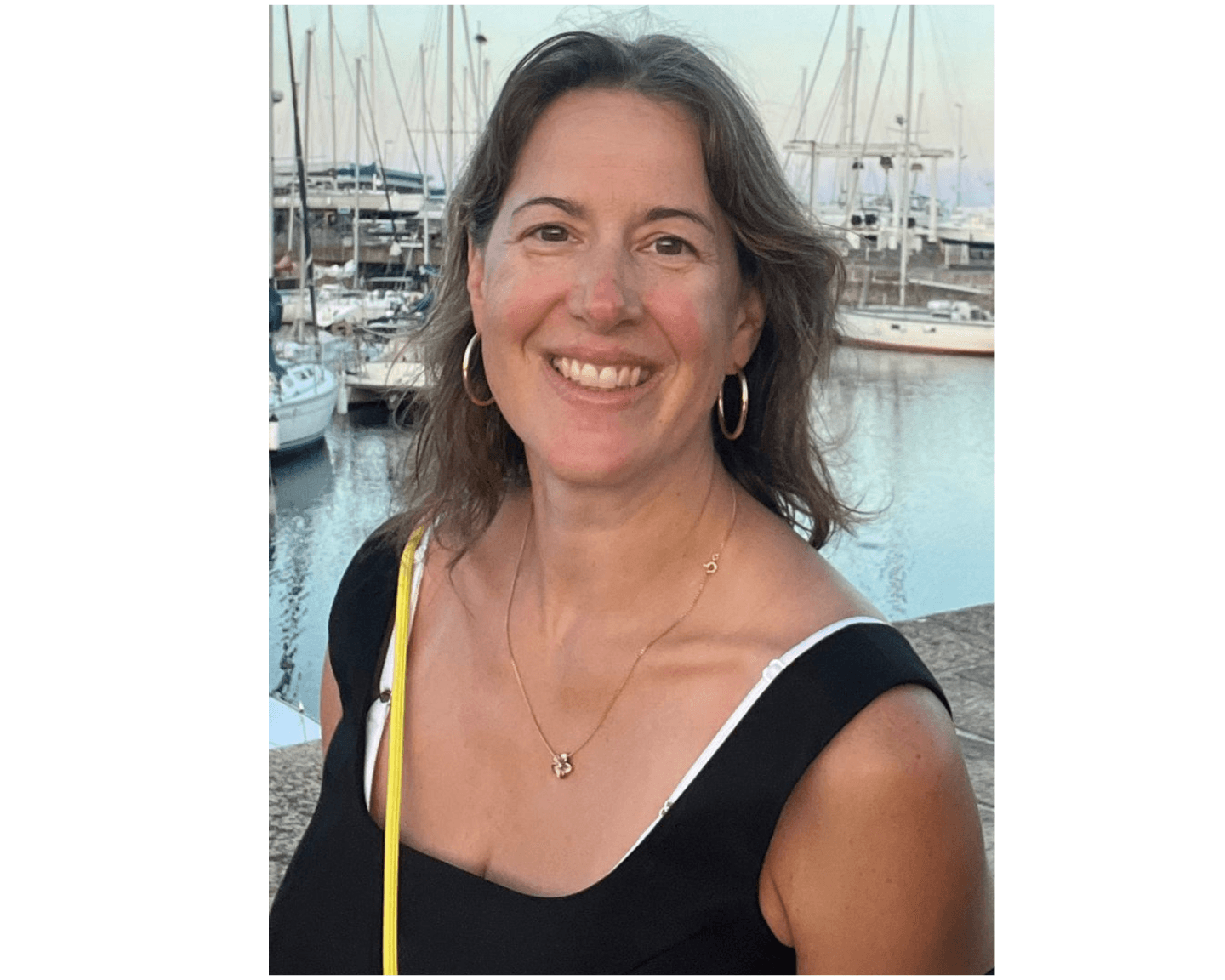
I'm Marie 🌺 a French woman living in Calgary, Canada, navigating midlife one small gesture at a time.
I've started over more than once: new country, new life, new career, new chapter. What I've learned?
Real transformation isn't about doing everything perfectly. It's about doing small things consistently.
My mission:
To remind you that you're allowed to begin again, at any age, in your own way.
On BetterUBoost, I share honest experiments, simple movements, and real talk for women navigating reinvention, peri/menopause, and empty nest.
Small gestures, real changes. Welcome to the sisterhood!



Get articles in your inbox every week
🌸Small movements. Real changes🌸
Better U Boost
Your reminder to boost your better self,
one small gesture at a time.